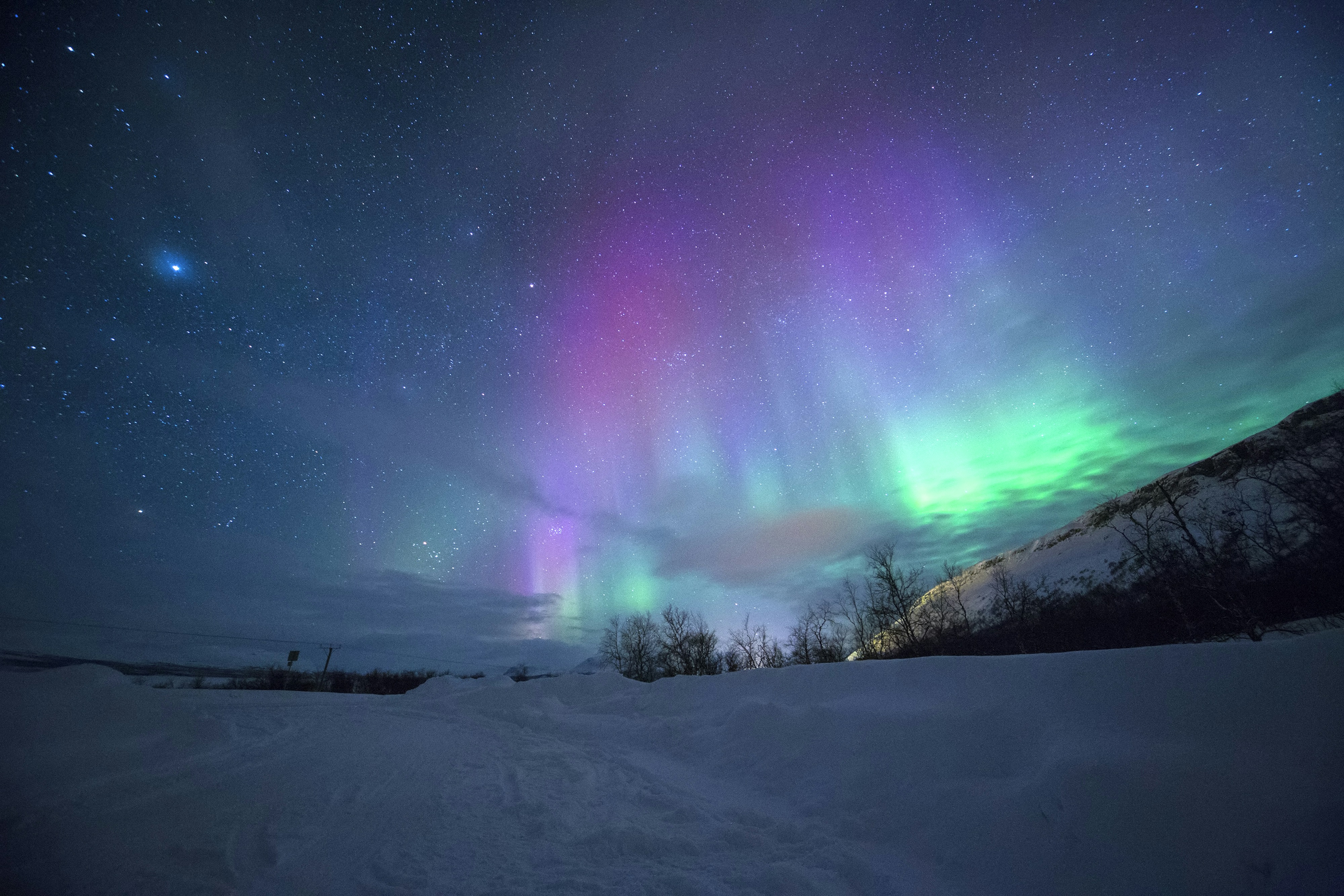
There is something profoundly humbling about standing alone in the Arctic dark, waiting for the sky to ignite. For two weeks last December I camped along the coast of Tromsø, Norway, chasing the elusive aurora borealis.
Preparation
Photographing the northern lights requires planning far beyond camera settings. I tracked solar wind data from NOAA, monitored cloud cover forecasts hourly, and scouted locations during the brief midday twilight. My kit was stripped to essentials: a sturdy tripod, a fast wide-angle lens, spare batteries kept warm inside my jacket, and a headlamp with a red filter to preserve night vision.
The Waiting Game
Most nights produced nothing. The aurora is not a show you can schedule. You drive to a dark site, set up, and wait. Sometimes for hours. Sometimes the clouds never break. On the fifth night, though, the sky cracked open. A faint green arc appeared low on the horizon, then erupted into curtains of light that stretched from one end of the sky to the other.
Lessons Learned
If I could give one piece of advice to anyone attempting this kind of work, it would be: stay one more night. The best frames always come when you have almost given up. Patience is not just a virtue in landscape photography — it is the entire discipline.