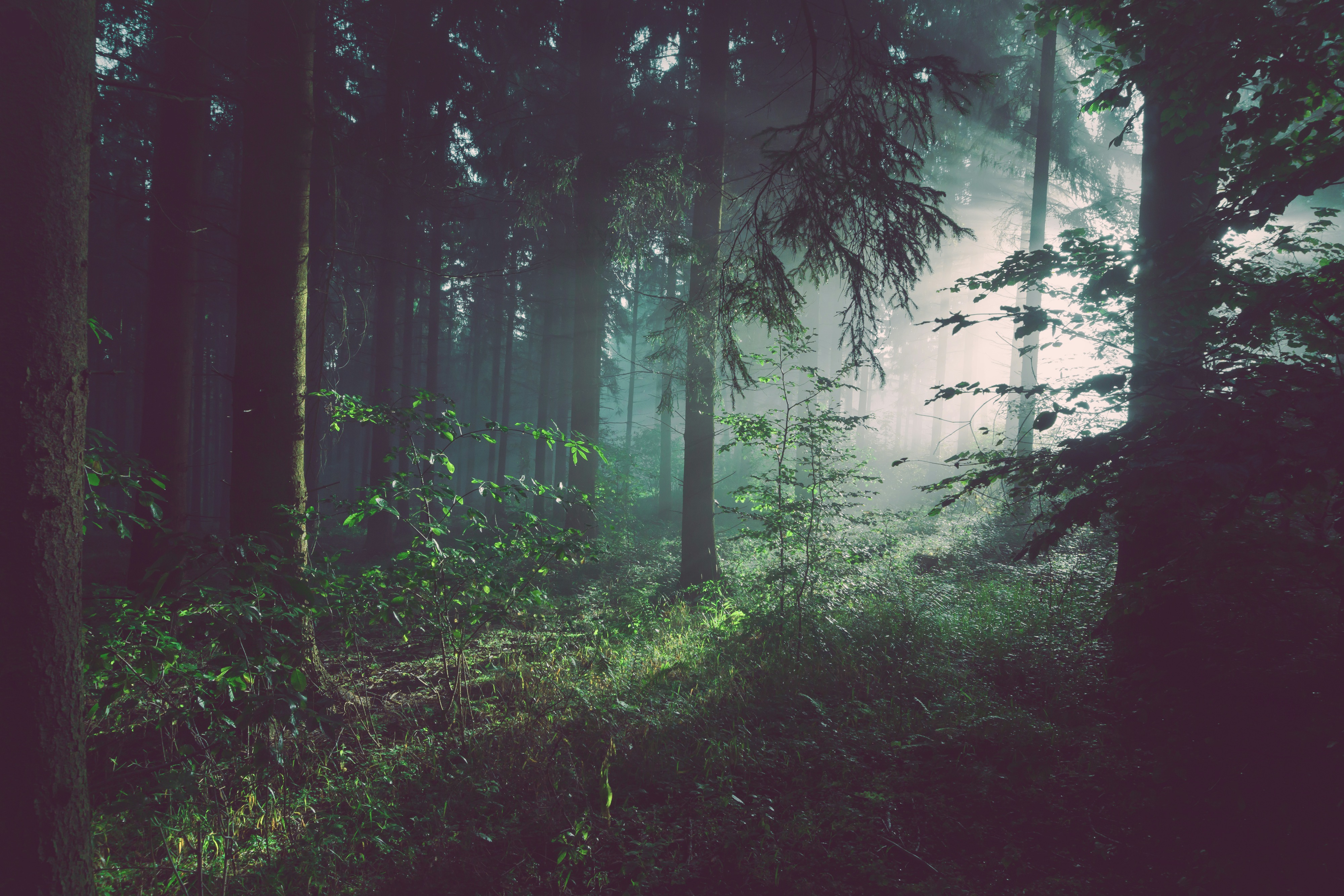
Forests are among the most challenging environments for landscape photography. Unlike open vistas where the eye has a clear anchor, woodland scenes are crowded with competing elements — trunks, branches, ferns, rocks, light patches. The key is simplification.
Look for Leading Lines
A path, a fallen trunk, or a stream can pull the viewer into the frame and give the eye somewhere to travel. Without a leading line, forest images often feel flat and directionless. I walk the trail first without my camera, looking for natural guides before I even think about a tripod position.
Embrace the Fog
Mist and fog are a forest photographer's best friend. They separate layers of trees, soften distracting backgrounds, and add a sense of depth that clear conditions rarely provide. If the forecast calls for morning fog, I set an alarm and drive — no exceptions.
Shoot on Overcast Days
Harsh sunlight creates extreme contrast in a forest. Bright patches next to deep shadows are nearly impossible to expose correctly. Overcast skies act like a giant softbox, distributing light evenly and allowing you to capture the full tonal range of greens, browns, and mossy textures.